
Productivity and quality in agricultural production are directly linked to correct feeding strategies. Especially in recent times, the use of liquid fertilizers instead of traditional solid fertilizers is increasingly preferred due to its many advantages. The use of liquid fertilizers is growing to provide plants with the necessary nutrients in the most efficient way. The effectiveness of these fertilizers is critically important when they have a homogeneous mixture. Hommak Homogenizers offer significant advantages to agricultural producers by ensuring the best possible distribution of fertilizer components.
The Importance of Liquid Fertilizers and Homogenization
Liquid fertilizers are formulations containing macro and micronutrients needed by plants and can be applied to the soil and leaves. However, the effectiveness of these fertilizers depends on the homogeneous distribution of nutrients. A non-homogeneous mixture can cause some plants to absorb more nutrients than necessary, while others are undernourished.
Hommak Homogenizers, operating at high pressure levels such as 400 bar, distribute nutrients at nanometric sizes, ensuring more efficient absorption. They also prevent sedimentation and phase separation, guaranteeing long-term stability of the fertilizer. This prevents clogging in spraying systems and increases efficiency.
Types of Liquid Fertilizers and the Role of Homogenizers
The main types of liquid fertilizers used in modern agriculture include nitrogen, phosphorus, potassium fertilizers, and micronutrient fertilizers. Organic liquid fertilizers, derived from plant and animal sources, support beneficial microorganisms in the soil.
Thanks to homogenizer technology, particles are reduced to sub-micron sizes using high-pressure homogenizers, ensuring a more balanced and effective nutrient distribution. The use of High Shear Mixers and Micro-Cuts thoroughly mixes the components of liquid fertilizers, increasing dissolution efficiency. These processes provide colloidal stability, extending the product’s shelf life and offering logistical and storage advantages.
Advantages of Liquid Fertilizer Compared to Solid Fertilizer
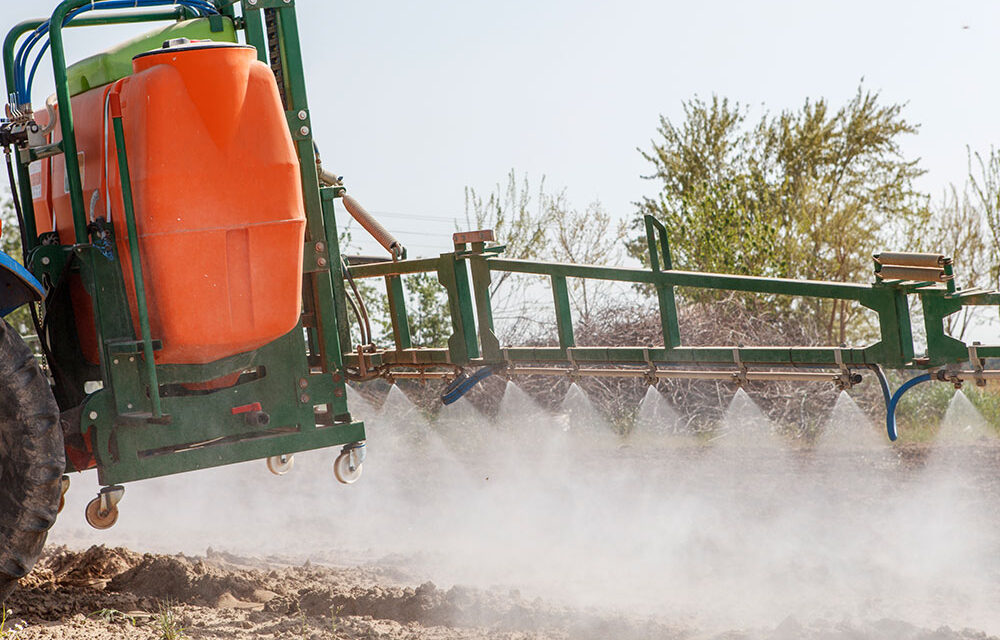
Fast and Efficient Absorption: Because liquid fertilizers are water-based, they move quickly in the soil and are easily absorbed by plants. This allows nutrients to reach the root system faster and enables plants to use these nutrients immediately. More Homogeneous Distribution: Liquid fertilizers processed with homogenizer technology distribute the nutrients they contain more evenly in the soil. This guarantees that every point in the field receives an equal amount of nutrients and ensures the nutrient balance that is important for plant health. Dosage Control: Liquid fertilizers allow for easy dosage adjustment during application. This reduces the risk of over- or under-fertilization and increases cost-effectiveness in fertilizer use. Ease of Application: Liquid fertilizers can be easily applied with modern pulverization systems. These systems make it possible to use the fertilizer for both soil and foliar applications, offering flexibility not possible with solid fertilizers. Reduced Soil Compaction: Heavy machinery used during solid fertilizer applications can cause soil compaction and negatively affect root development. Liquid fertilizers can be applied with lighter equipment or even innovative methods like drones, preserving the structural integrity of the soil. Environmental Impact Reduction: When used correctly, liquid fertilizers can reduce environmental impact. Losses such as nitrogen volatilization can be minimized through more controlled application techniques. Furthermore, resource conservation can be achieved by using lower quantities of liquid fertilizers.
Conclusion
Homogenization of liquid fertilizers enables the continuous development of more effective and efficient solutions in agriculture. By using Hommak Homogenizers, the nutrients in liquid fertilizers are distributed more effectively, and plants benefit maximally from these nutrients. Thus, quality and productivity in agricultural production are increased, adding value to both producers and consumers.