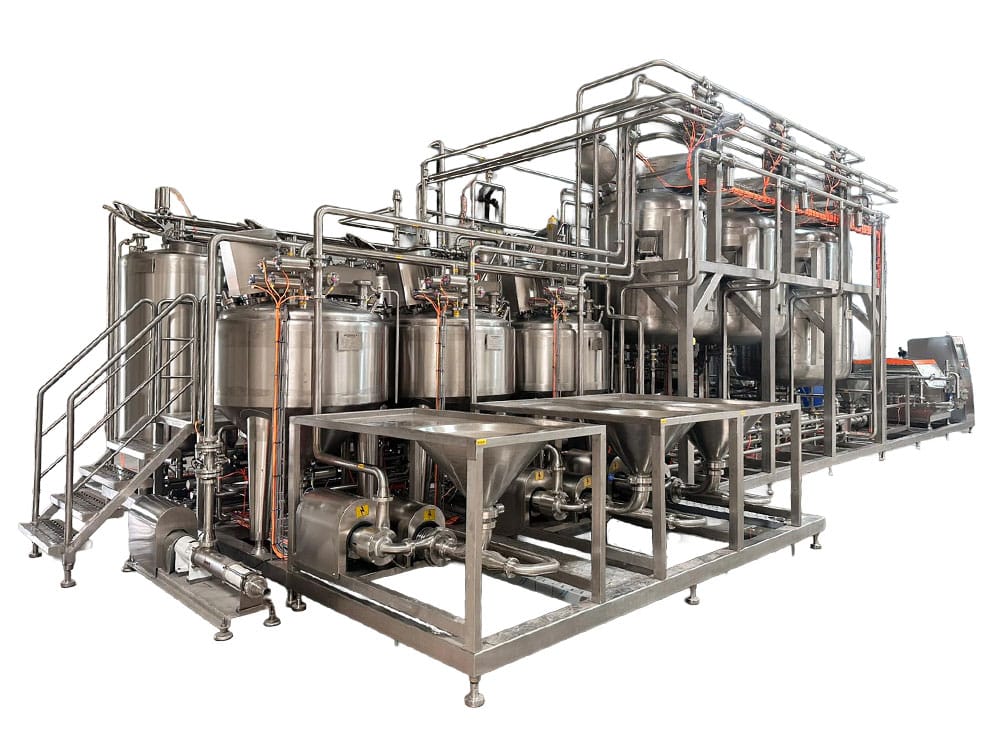
Shampoo and Hair Conditioner Production Line
A shampoo and hair conditioner production line is used to combine, mix, homogenize, process, and store the raw materials for shampoo and hair conditioner.
At HOMMAK Machinery, our experienced and expert teams manufacture high-efficiency shampoo and hair conditioner production lines designed specifically for your needs. With our knowledge and dedication, we are always by your side to meet your requirements.
20+ Years of Experience
We have been active in the industry since 2004
Manufacturer’s Guarantee
We guarantee full customization and competitive pricing
Short Lead Times
Our in-house production capacity keeps lead times to a minimum
The Importance of Line Design in Shampoo and Conditioner Production
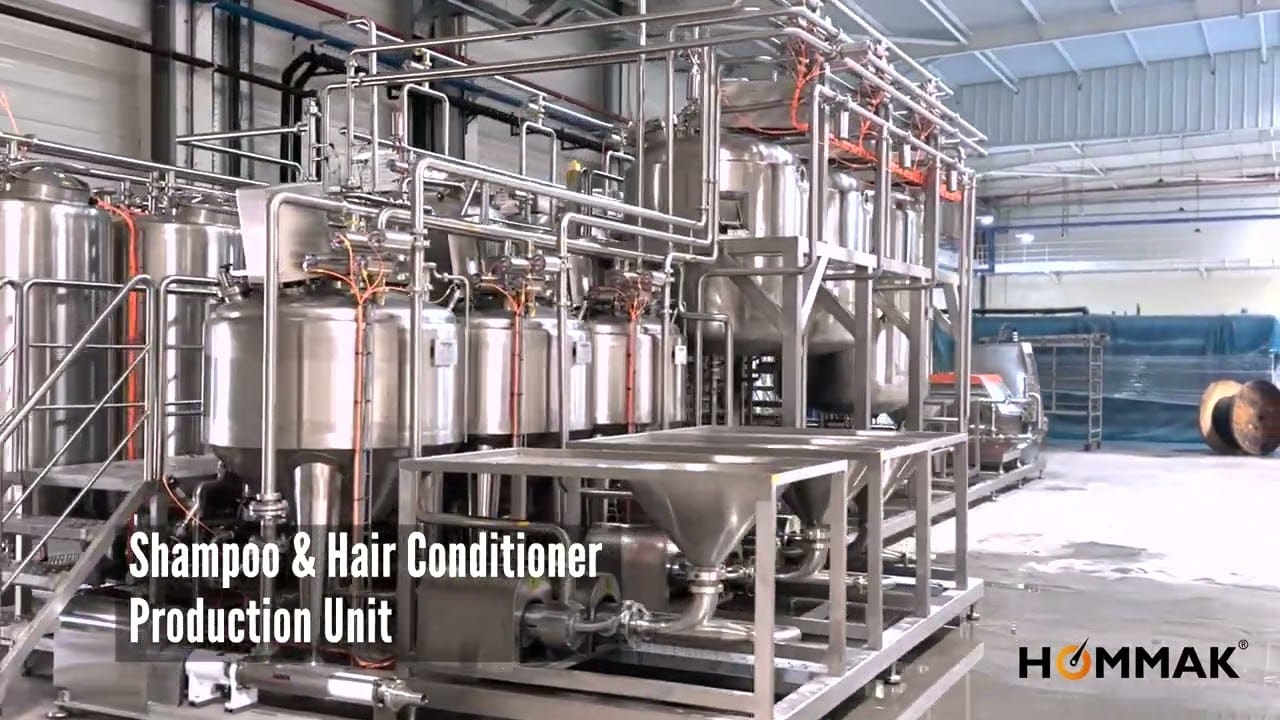
The success of a formulation in shampoo and conditioner manufacturing heavily relies on the engineering quality of the production line. Key criteria for a consistent final product include dosing surfactants at the correct temperature, mixing oil-water phases to form a stable emulsion, and ensuring fluid transfer without air bubble formation.
Hommak manufactures custom shampoo and conditioner production lines tailored to cosmetic producers’ daily output volumes, product variety, and hygiene standards. CIP integration, an AISI 316L stainless steel body construction, and a PLC-controlled automation architecture ensure the line delivers stable performance for many years.
The Role of High-Pressure Homogenizers in the Production Line
The desired creamy texture, shine, and long shelf life in shampoo—and especially conditioner—formulations are achieved by reducing oil droplets to a sub-micron size. High-pressure homogenizers accomplish this micronization process by forcing the mixture through a narrow valve gap under designated pressure, completely eliminating the risk of phase separation in the emulsion.
As Turkey’s first domestic manufacturer of high-pressure homogenizers, Hommak offers industrial, pilot plant, and laboratory-type homogenizer solutions engineered specifically for the precise viscosity and hygiene requirements of cosmetic production. This allows formulations tested at the pilot scale to be seamlessly scaled up to industrial production lines with identical quality.
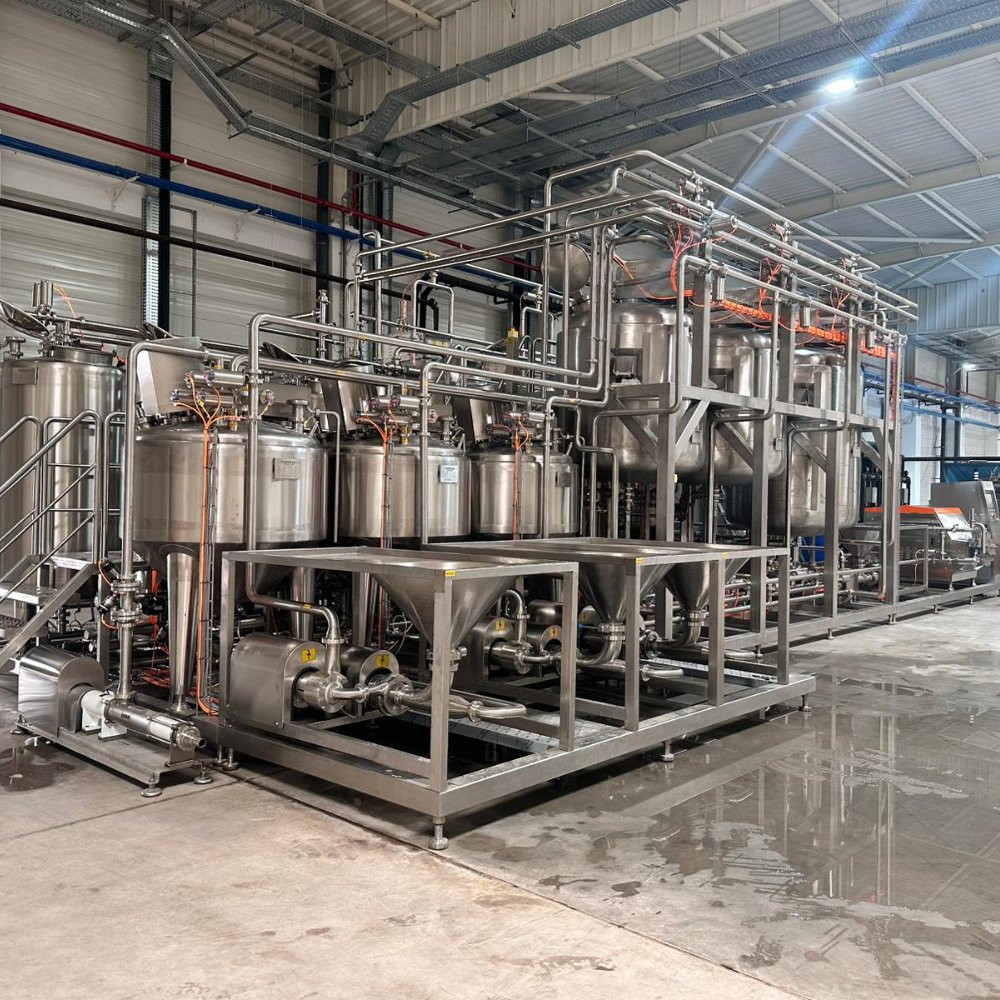
Turnkey Production Line Solutions from Hommak
Hommak Makina designs and manufactures every single component of the production line—from mixers and homogenizers to centrifugal pumps and filling systems—with its own in-house engineering team. This single-supplier model significantly reduces installation times and provides the advantage of having a single point of contact for all after-sales support.
To receive a customized proposal tailored to your capacity, formulation, and automation needs for your shampoo and conditioner production line, please fill out the contact form on this page.
Contact Form
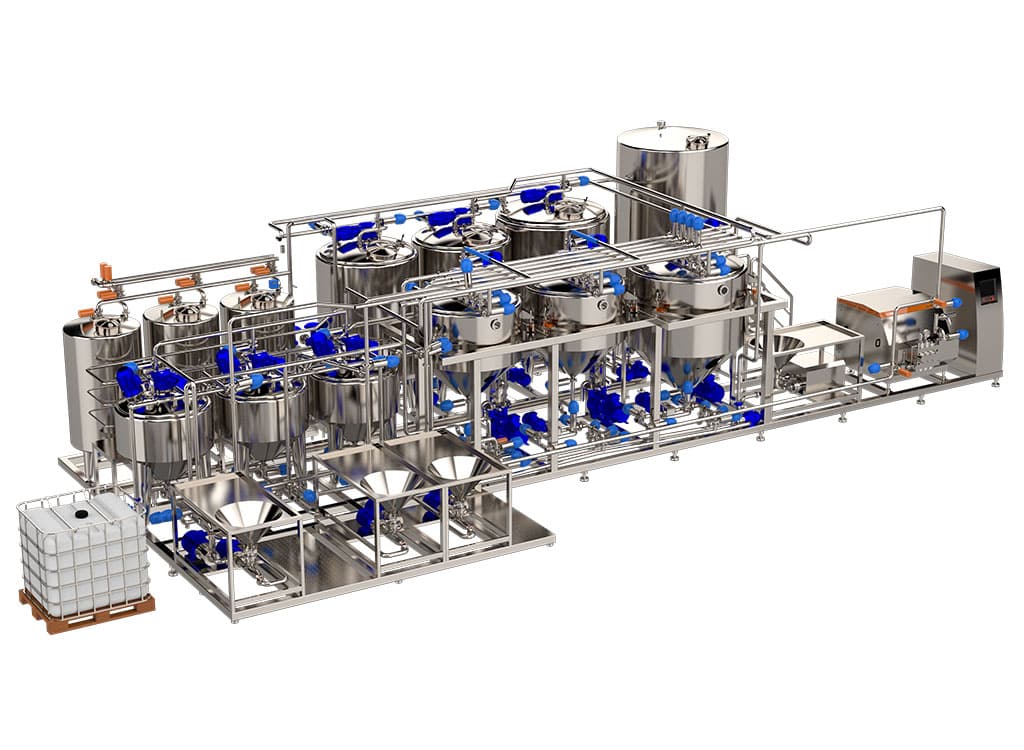
Core Components of a Shampoo and Conditioner Production Line
A professional shampoo and conditioner production line consists of several integrated components that directly impact product quality. The success of the line design depends on choosing these machines with the right capacities and optimizing the process flow between them.
- Raw Material Preparation Tanks: The starting point of the production process. These stainless steel, jacketed tanks are where water pre-heating takes place, and the surfactant and oil phases are prepared separately. The tank walls are insulated to keep temperatures stable.
- High-Shear Mixers and MicroMix Systems: These systems ensure homogenous blending of raw materials. Thanks to the high-speed rotor-stator assembly, surfactant agglomerates are broken down, viscosity thickeners dissolve rapidly, and the risk of cloudiness in clear shampoo formulations is eliminated.
- High-Pressure Homogenizers: The most critical machine in the production line. For high-viscosity and emulsion-based products like hair conditioners, reducing oil droplets to sub-micron levels is only possible through industrial homogenizers operating at optimal pressure values. This process ensures product stability and prevents phase separation throughout its shelf life.
- Centrifugal Pumps: Used for transferring the mixture between tanks, within the filtration line, and to the filling line. Centrifugal pumps preferred in cosmetic manufacturing must feature a hygienic design and rotor geometry suitable for viscous fluids.
- Filling Machines: The final stage of the production line. Semi-automatic or fully automatic filling systems are selected based on bottle format, dosing volume, and daily production targets. Post-filling stations like capping, labeling, and packaging complete the integrity of the line.
How the Shampoo and Conditioner Production Process Works
- Raw Material Weighing: The process begins with raw material weighing. Surfactants, viscosity adjusters, preservatives, fragrances, colorants, and conditioning agents are precisely dosed using sensitive scales and transferred to separate tanks based on the formulation.
- Phase Preparation: The water phase undergoes pre-heating to a specified temperature, and water-soluble components are added and blended using a mixer. In conditioner production, the oil phase is prepared in a separate tank and heated to a range of 70–80°C alongside appropriate emulsifiers.
- Emulsification & Homogenization: The two phases are combined in the main production tank utilizing a high-shear mixer, creating a pre-emulsion. However, to guarantee premium product quality, the mixture is then transferred to the high-pressure homogenizer for sub-micron particle size reduction, providing ultimate emulsion stability.
- Cooling & Finalization: Following homogenization, the product is cooled down under controlled conditions. Temperature-sensitive ingredients like perfume and preservatives are introduced during this stage. Once quality control tests are successfully completed, the product is transferred to filling tanks, packaged on the filling line, and made ready for shipment.
Key Advantages of Hommak Production Lines
- Flexible Capacity Design: One of the standout features of Hommak production lines. Custom engineering is available for all volume ranges, from boutique setups producing 500 kg daily to industrial scales of 20 tons and above.
- High Hygiene Standards: An absolute must for cosmetic manufacturing. All product-contact surfaces are constructed from AISI 316L stainless steel, welds are polished, and the entire line is engineered to integrate seamlessly with a CIP (Clean-in-Place) washing system.
- Advanced Automation: A PLC and SCADA-based automation infrastructure enables automated management of production parameters according to recipes. Critical variables like temperature, pressure, mixing speed, and duration are monitored and logged to guarantee complete product traceability.
- R&D-Driven Engineering: Hommak customizes production lines based on the unique formulation characteristics of each client. Unlike off-the-shelf equipment sales, this creates substantial engineering value that directly improves product performance.
Quality Factors in Shampoo and Conditioner Production
- Product Stability: The primary metric of success for cosmetic formulations. Shampoos and conditioners processed under the correct homogenization pressure experience zero phase separation, sedimentation, or viscosity changes throughout their shelf life.
- Viscosity Control: A critical parameter affecting consumer perception. Mixing speeds, temperature profiles, and homogenization pressures within the line design must be optimized to reach the exact target viscosity.
- Hygiene & Contamination Prevention: The foundation of cosmetic product safety. Lines integrated with CIP and SIP (Sterilization-in-Place) eliminate microbial load buildup during production breaks and ensure strict compliance with international GMP standards.
- Energy Efficiency & Waste Minimization: Crucial for sustainable production. Hommak lines ensure eco-friendly manufacturing through high-efficiency motors, heat recovery integration, and low-water-consumption CIP cycles.
Frequently Asked Questions (FAQ)
How is the capacity of a shampoo and conditioner production line determined? Capacity is determined based on current daily production targets, number of shifts, product variety, and a five-year growth projection. The Hommak engineering team provides optimum capacity recommendations based on the manufacturer’s market data.
Can both shampoo and conditioner be produced on the same line? Yes. With correct CIP integration, flexible mixing speeds, and adjustable homogenization pressures, products with different viscosities and formulations can be produced on the same line. This approach significantly lowers initial investment costs for small and medium-sized manufacturers.
What is the installation time for a production line? The engineering, manufacturing, and commissioning process for a standard, medium-capacity shampoo and conditioner production line typically spans 12 to 20 weeks. This timeframe is finalized per project based on automation scope, tank count, and specific formulation requirements.
Can shampoo be manufactured without a homogenizer? Low-viscosity clear shampoos can be produced using only a mixer. However, to achieve a stable emulsion in creamy shampoos, conditioners, and hair masks, utilizing a high-pressure homogenizer is absolutely essential.
Contact Us Now
Contact our expert team today for tailored solutions for your projects.