
Pasteurization Unit (HTST)
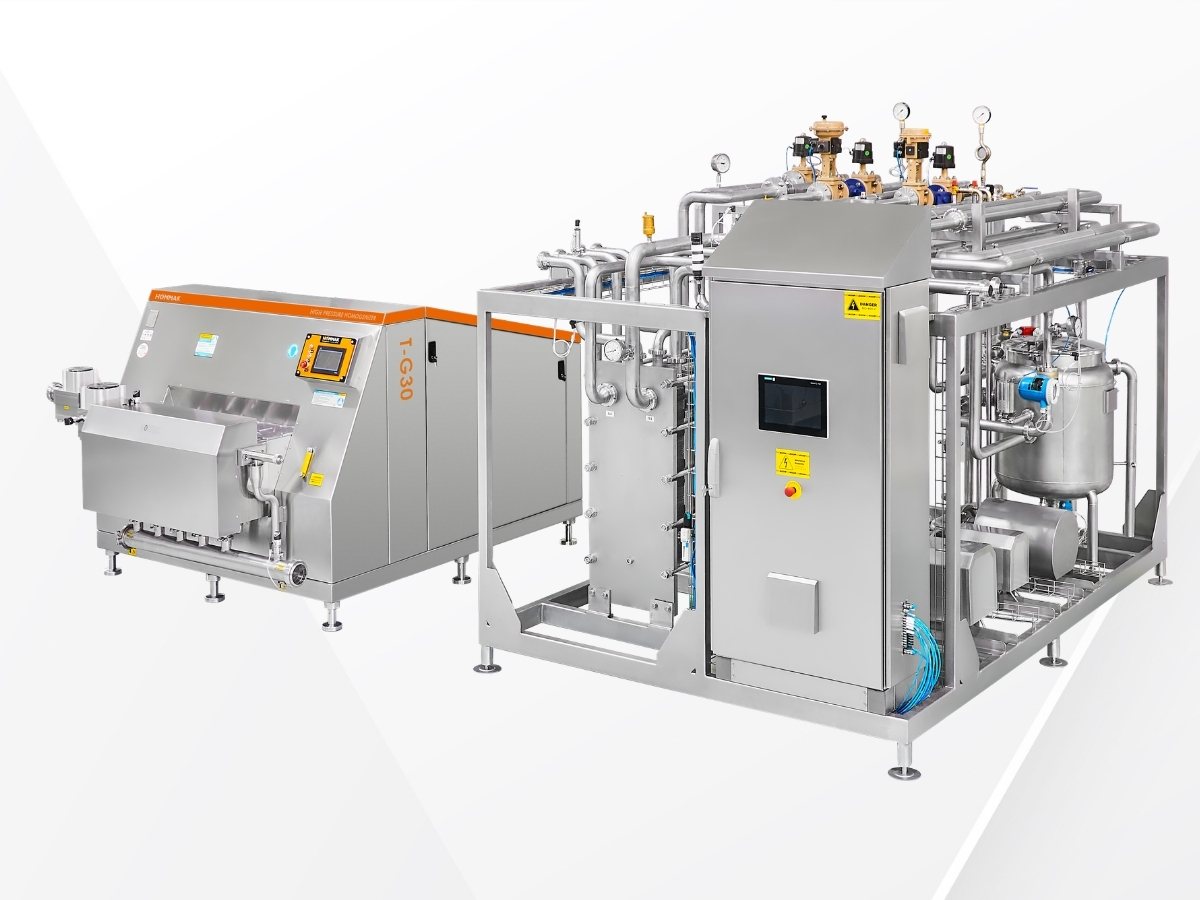
The HOMMAK pasteurization unit is a continuous-flow heat-treatment system designed to free foods such as milk, dairy products, fruit juice and beverages from pathogenic microorganisms. The product is briefly raised to a high temperature (HTST) to make it safe, while flavor and nutritional value are preserved.
20+ Years of Experience
We have been active in the industry since 2004
Manufacturer’s Guarantee
We guarantee full customization and competitive pricing
Short Lead Times
Our in-house production capacity keeps lead times to a minimum
What Does a Pasteurization Unit Do?
Pasteurization is a heat treatment that destroys harmful microorganisms by holding food at a specific temperature for a specific time. In HTST (High Temperature Short Time) pasteurization, the most common method, the product is typically held at 72 °C for 15 seconds; this extends shelf life while largely preserving the product’s organoleptic properties.
HOMMAK pasteurization units are designed for different capacities, from small-scale production facilities to large industrial lines. The system can be adapted to a wide range of applications, from milk and yogurt production to fruit juice, beverage, cream and sauce lines.
Advantages of the HOMMAK Pasteurization Unit
- High energy efficiency: Multi-stage regeneration (heat recovery) reduces the energy spent on heating and cooling.
- Safe production: Thanks to the FDV and continuous temperature control, not a single drop of product that fails to reach the target temperature is sent to packaging.
- Full traceability: The PLC control panel records temperature, flow-rate and time data in real time, providing retrospective reporting for food safety audits.
- Hygienic design: All product-contact surfaces are made of food-grade stainless steel and are suitable for CIP (Cleaning in Place) cleaning.
- Flexible capacity: Configured at different flow rates and automation levels according to plant requirements.
A Quote Tailored to Your Capacity
Get in touch with the HOMMAK engineering team for the pasteurization unit configuration best suited to your business. Let us offer a solution tailored to your capacity, product type and automation needs.
Contact Form
Working Principle
The process flow is built on a staged cycle that guarantees food safety:
- Balance tank (BTD): The product is first taken into a constant-level balance tank and fed from there to the plate heat exchanger.
- Regeneration (pre-heating): The pasteurized hot product is used to pre-heat the incoming cold product. This heat recovery significantly lowers the energy needed to reach pasteurization temperature.
- Heating: The product is raised to the targeted pasteurization temperature via a hot water or steam circuit.
- Holding tube: A stainless steel pipeline with a calculated hydraulic slope holds the product at the target temperature for the legally required time, ensuring correct pasteurization.
- Flow diversion valve (FDV): If the temperature drops below the set point, the valve activates and automatically returns the product to the balance tank. This prevents unpasteurized product from passing to the filling line.
- Cooling: At the outlet, the product is typically cooled to 4 °C for cold filling or storage.
Technical Specifications
The following values are typical references for standard HTST milk pasteurization; they are configured according to product type and process requirements.
| Parameter | Value |
|---|---|
| Capacity options | 500 – 1,000 – 2,000 – 3,000 – 5,000 L/hour |
| Product inlet temperature | 4 °C |
| Pasteurization temperature | 72 °C |
| Product outlet temperature | 4 °C |
| Holding time | 15 sec |
| Hot water temperature | 74 °C |
| Cooling (glycol) water | 4 °C |
Consult the HOMMAK sales team for other operating parameters, capacities and special product applications.
Material and Hygiene
- Product-contact parts: AISI 304 (AISI 316L plates on request)
- Control panel and frame: AISI 304 stainless steel
- Product-contact gaskets: EPDM and NBR
- Surface finish: Ra ≤ 0.8 µm
The entire system is designed with a hygienic production philosophy compliant with HACCP and international food safety requirements.
Unit Design and Components
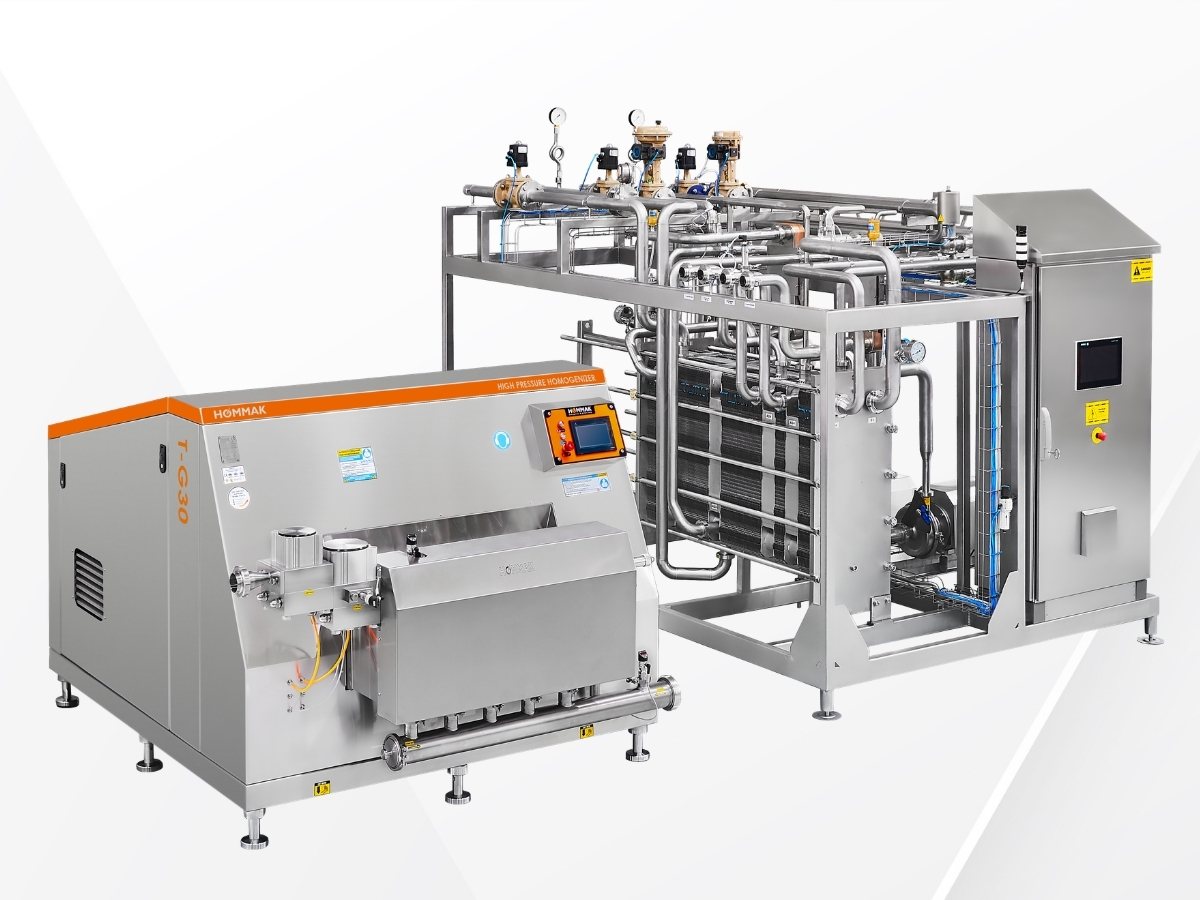
The compact unit is delivered on a single stainless steel chassis and includes the following main components:
- Constant-level balance tank (AISI 304)
- Hygienic feed pump
- Plate heat exchanger with 1, 2 or 3 stages depending on the process
- Slightly inclined holding tube for full pump drainage
- Automatic flow diversion valve and manually operated butterfly valves
- 3-way proportional valve with electro-pneumatic positioner for hot water
- Stainless steel chassis with height-adjustable feet
- PLC control panel with temperature regulator
Optional Equipment
- Steam-heated hot water generation circuit
- Flow control for the feed pump with a frequency converter and electromagnetic flowmeter on the control panel
- Paper or digital temperature/flow recorder
- Special heat exchanger plates for products containing suspended solid particles
- 4-stage heat exchanger for homogenizer and cream-separator integration
- Different temperature and holding-time modes (yogurt, cream, fruit juice, etc.)
Applications
HOMMAK pasteurization units are used in different sectors:
- Milk and dairy products: Raw milk, yogurt milk, cream, drinking milk
- Beverages and fruit juice: Fruit juices, nectar, iced tea, plant-based drinks
- Food processing: Sauce, paste, liquid egg and similar fluid products
Integration with HOMMAK Process Solutions
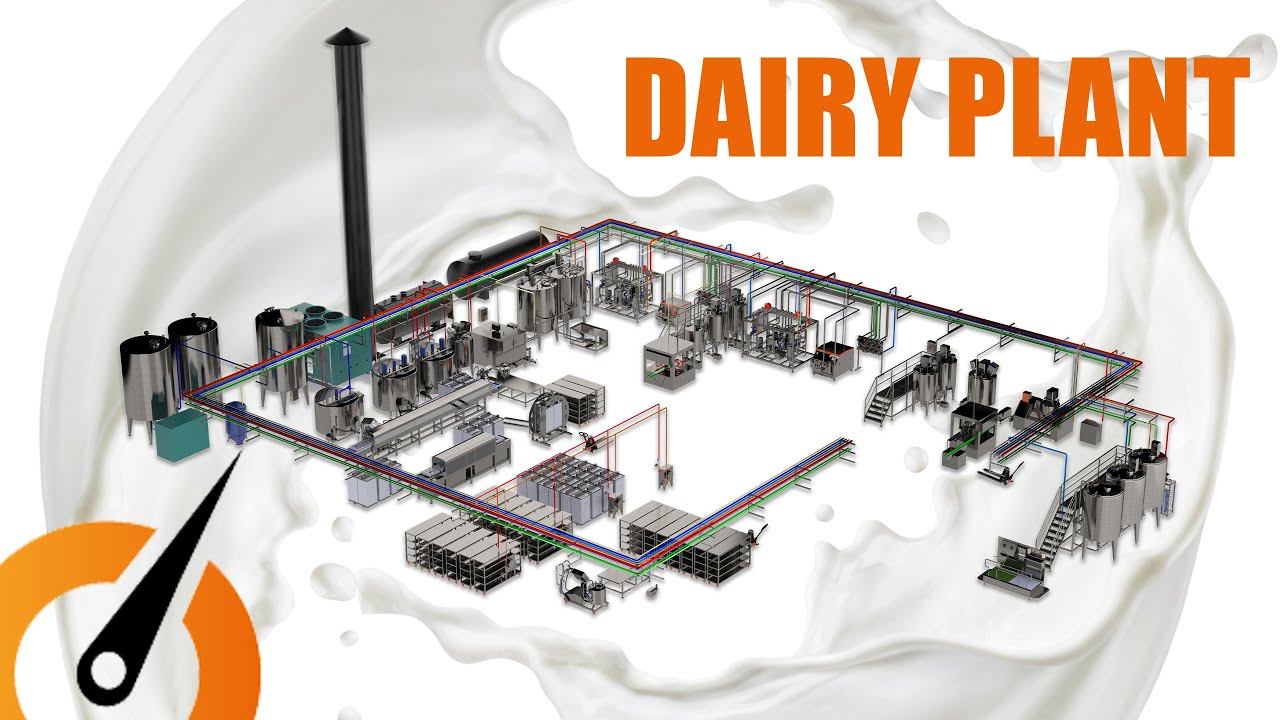
The pasteurization unit can be set up as a complete production line together with HOMMAK’s other process equipment. A high-pressure homogenizer to increase the viscosity and stability of the milk, a positive-displacement piston pump to transfer viscous products, a Hommix powder-liquid mixer to prepare powder/liquid recipes and a CIP system for line hygiene are integrated under a single engineering roof. This way, supply, commissioning and service are handled from a single source.
Frequently Asked Questions
What is HTST pasteurization?
HTST (High Temperature Short Time) is a continuous pasteurization method in which the product is raised to a high temperature for a short time. For milk, it is usually applied at 72 °C for 15 seconds. This method destroys pathogens while largely preserving the product’s taste and nutritional value.
At what temperature does a pasteurization unit operate?
Standard milk pasteurization is carried out at around 72 °C with a 15-second holding time. The temperature and time are configured by HOMMAK according to the product’s type, viscosity and targeted shelf life. Different parameters may be used for products such as fruit juice, cream or sauce.
What is the difference between a pasteurizer and a homogenizer?
A pasteurizer makes the product microbiologically safe through heat treatment. A homogenizer, on the other hand, micronizes particles under high pressure to give the product a permanently homogeneous structure. On milk lines, the two pieces of equipment are mostly used together, in sequence.
Does a pasteurization unit save energy?
Yes. Thanks to multi-stage regeneration, the pasteurized hot product is used to pre-heat the incoming cold product. This heat recovery significantly lowers the energy consumption needed for heating and cooling.
In which capacities is it available?
HOMMAK pasteurization units can be designed in capacities ranging from 500 L/hour to 5,000 L/hour and above, from small businesses to large facilities. Contact our sales team for the model that suits your needs.
Contact Us Now
Contact our expert team today for tailored solutions for your projects.