
Dairy and Dairy Product Homogenization Solutions
In the dairy and dairy products sector, homogenization is a fundamental processing step that directly determines product quality, consistency, and shelf life. High-pressure homogenizers reduce fat globules within the milk to micron levels, ensuring a stable, consistent, and uniform structure. Consequently, cream separation is prevented, flavor is enhanced, and the product remains suitable for long-term consumption.
With over 20 years of experience and engineering expertise, HOMMAK is the industry’s reliable solution partner in high-pressure homogenizer manufacturing.
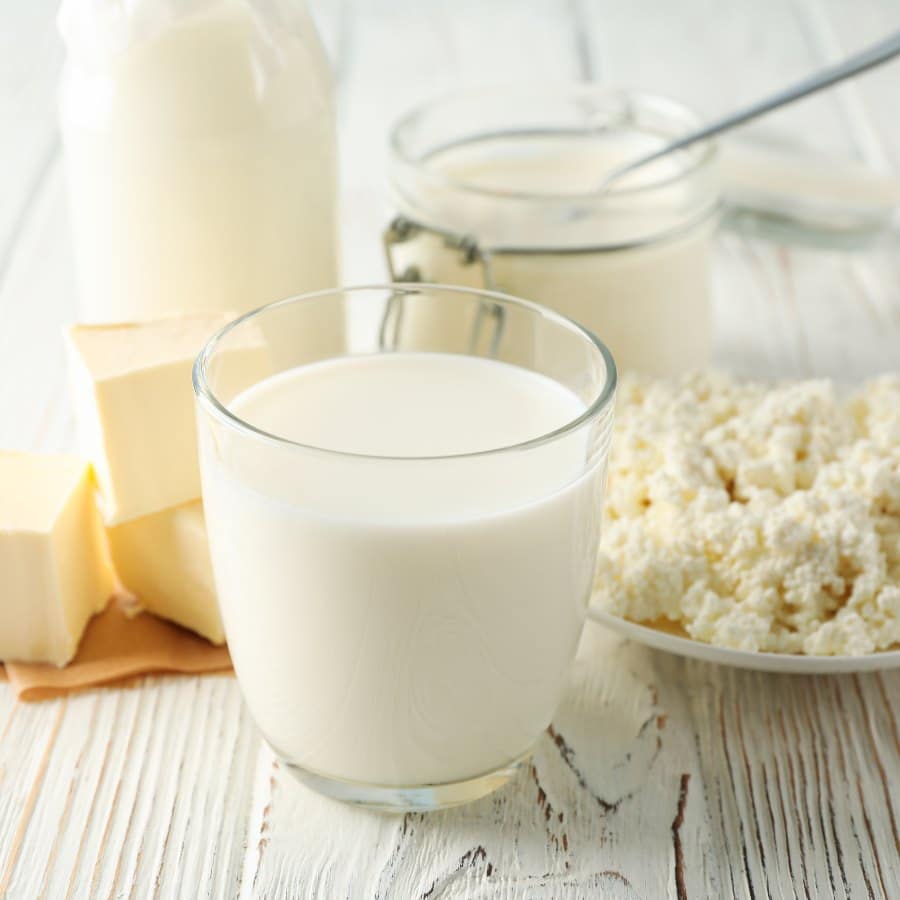
Importance of Homogenization in Dairy Products
Fat globules in raw milk are 3-5 microns in diameter and, due to density differences, rise to the surface over time to form a cream layer. In modern dairy plants, homogenization is an unavoidable step to prevent this natural separation and make the product stable for the consumer. At the end of the process, fat globules are reduced to under 1 micron, ensuring a uniform distribution within the liquid.
Homogenization improves not only visual quality but also many parameters that directly affect the consumer experience, such as taste, texture, digestibility, and shelf life. For this reason, it is used in almost every stage of industrial dairy production, especially for pasteurized milk, UHT milk, yogurt, ice cream, and fermented beverages.

Effect of Homogenization on Milk Quality
The surface area of fat globules broken down under high pressure increases; this allows the milk to reflect light better, creating a whiter and brighter color. At the same time, a wider contact surface is formed with aroma receptors, making the milk feel fuller and more delicious on the palate.
Micron-sized fat particles are broken down faster by digestive enzymes, which increases digestibility. In yogurt, kefir, and fermented dairy products, the high viscosity achieved through homogenization creates the characteristic consistency and texture of the product. All these gains translate into consumer satisfaction and brand consistency for manufacturers.
High-Pressure Homogenizer Applications in the Dairy Industry
High-pressure homogenizers are used across a wide range of applications in the dairy industry, from boutique dairies to large-scale dairy plants. While integrated with pasteurization in the drinking milk line, it ensures recipe stability in ice cream mix production; in milk powder production, it plays a critical role in homogenizing the concentrate before the spray dryer.
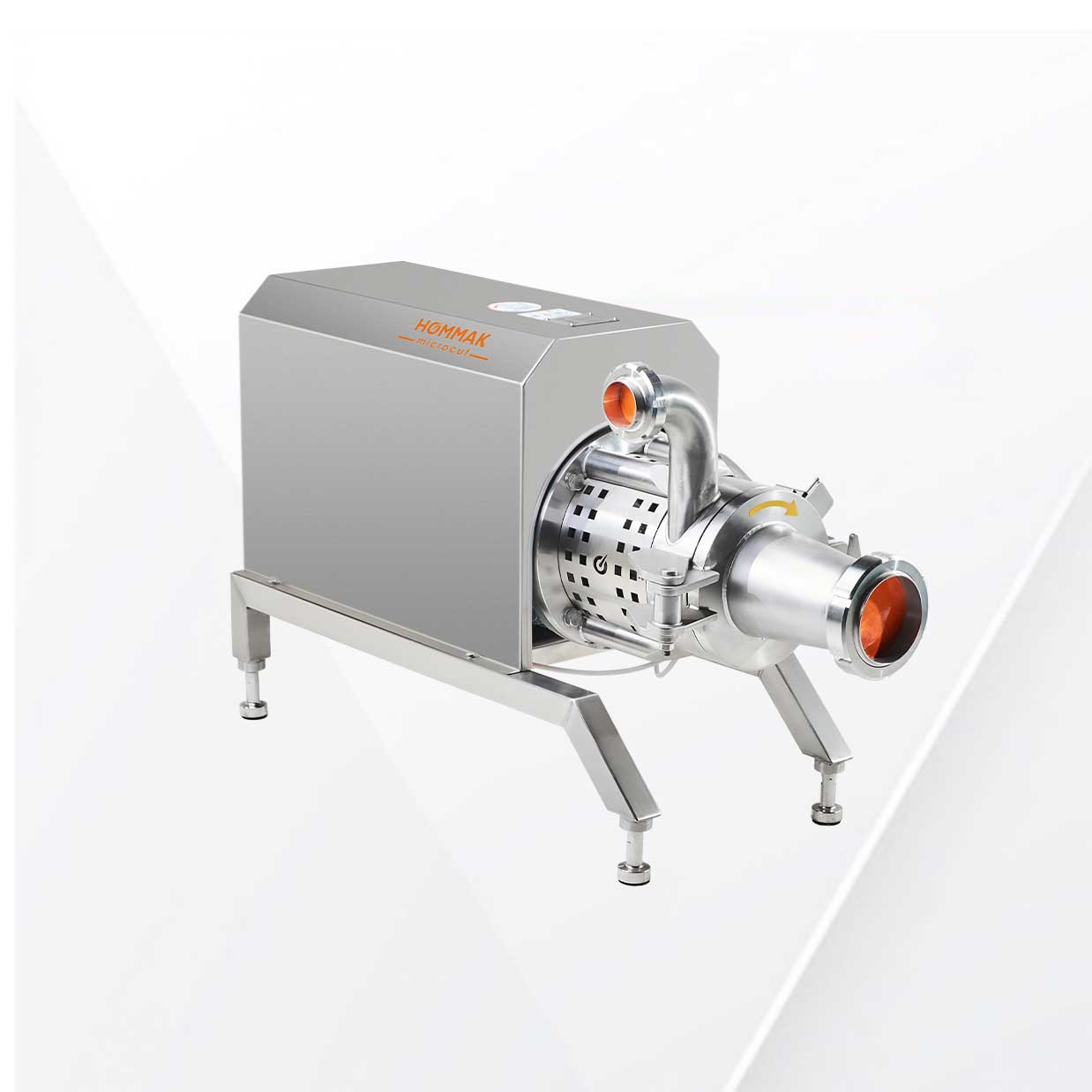
Hommak manufactures high-pressure homogenizers for laboratory, pilot plant, and industrial scales tailored to the needs of the dairy sector. As Turkey’s first domestic homogenizer manufacturer, we offer engineering support to dairy plants in capacity analysis, pressure-temperature optimization, and line integration.
Contact Form
How Does the Homogenization Process Work?
Homogenization occurs by passing the product through a special valve under high pressure using a piston pump. The sudden drop in pressure at the valve outlet creates three different physical effects: cavitation, turbulence, and impact. These forces work together to break down fat globules and ensure their even distribution within the liquid.
Throughout the process, the product’s temperature, viscosity, and fat content are the most important parameters determining the result. Therefore, the homogenizer must be designed to operate in harmony with the thermal management and flow control of the production line.
Homogenization Pressure and Temperature
Recommended Pressure Values by Product Type
| Product Type | Pressure (bar) | Temperature (°C) | Stage |
| Pasteurized drinking milk | 100-200 | 65-75 | Single-stage |
| UHT sterilized milk | 150-250 | 70-75 | Two-stage |
| Yogurt | 150-200 | 60-65 | Single-stage |
| Cream | 100-150 | 55-65 | Two-stage |
| Ice cream mix | 150-200 | 65-75 | Two-stage |
| Baby food / Infant formula | 200-300 | 65-75 | Two-stage |
| Milk powder concentrate | 150-250 | 65-75 | Two-stage |
Importance of Temperature
The ideal temperature range for homogenization is 60-75 °C. When processing below 50 °C, some of the milk fat remains solid, preventing the globules from being sufficiently broken down. Above 75 °C, protein denaturation begins, and whey proteins, in particular, may undergo structural changes.
Single-Stage and Two-Stage Homogenization
Homogenization can be applied as single-stage or two-stage depending on the product type. In a single-stage system, the product is passed through a single valve, and fat globules are broken down. This method is sufficient for low-viscosity products such as pasteurized drinking milk, ayran, and standard yogurt.
In a two-stage system, two consecutive valves are used. The first valve breaks down the fat at high pressure, while the second valve prevents the broken globules from clumping back together (clustering) at low pressure. In high-fat or high-viscosity products such as cream, ice cream mix, UHT milk, and baby food, the two-stage system provides better stability and longer shelf life.
Benefits of Homogenization to Milk
- Prevention of cream separation: Since fat globules are evenly distributed, no cream layer forms on the surface.
- White and bright appearance: Smaller fat particles reflect light better.
- More flavorful taste perception: Due to the expanded surface area, the aroma is felt more intensely.
- Easier digestion: Micron-sized fat particles are digested faster.
- Extended shelf life: Since separation is prevented, the product remains stable for longer.
- Increased viscosity: The desired consistency is achieved in yogurt and fermented products.
- Product standardization: Every batch is produced with the same homogeneous structure, reducing waste rates.
Which Dairy Products is it Used In?
- Drinking milk: Pasteurized, UHT, and microfiltered milk
- Fermented dairy products: Yogurt, kefir, ayran, probiotic beverages
- Cheese group: Cream cheese, labneh, curd cheese, ricotta
- Ice cream and dairy desserts: Ice cream mixes, pudding, rice pudding
- Coffee sector products: Coffee whiteners, instant coffees
- Infant nutrition products: Baby foods, follow-on formulas
- Milk powder production: Concentrate processing before spray drying
- Milk protein concentrates: WPC, MPC, and casein-based products
- Whey beverages: Whey protein-based sports drinks
Factors Affecting Homogenization
Applied Pressure: Increasing the pressure reduces the diameter of the fat globules. However, unnecessarily high pressure increases energy costs and accelerates mechanical wear. There is an optimum pressure value for each product.
Applied Temperature: It is recommended to keep the temperature above 60 °C so that the fat is sufficiently fluid. In systems integrated with pasteurization, this condition is naturally met.
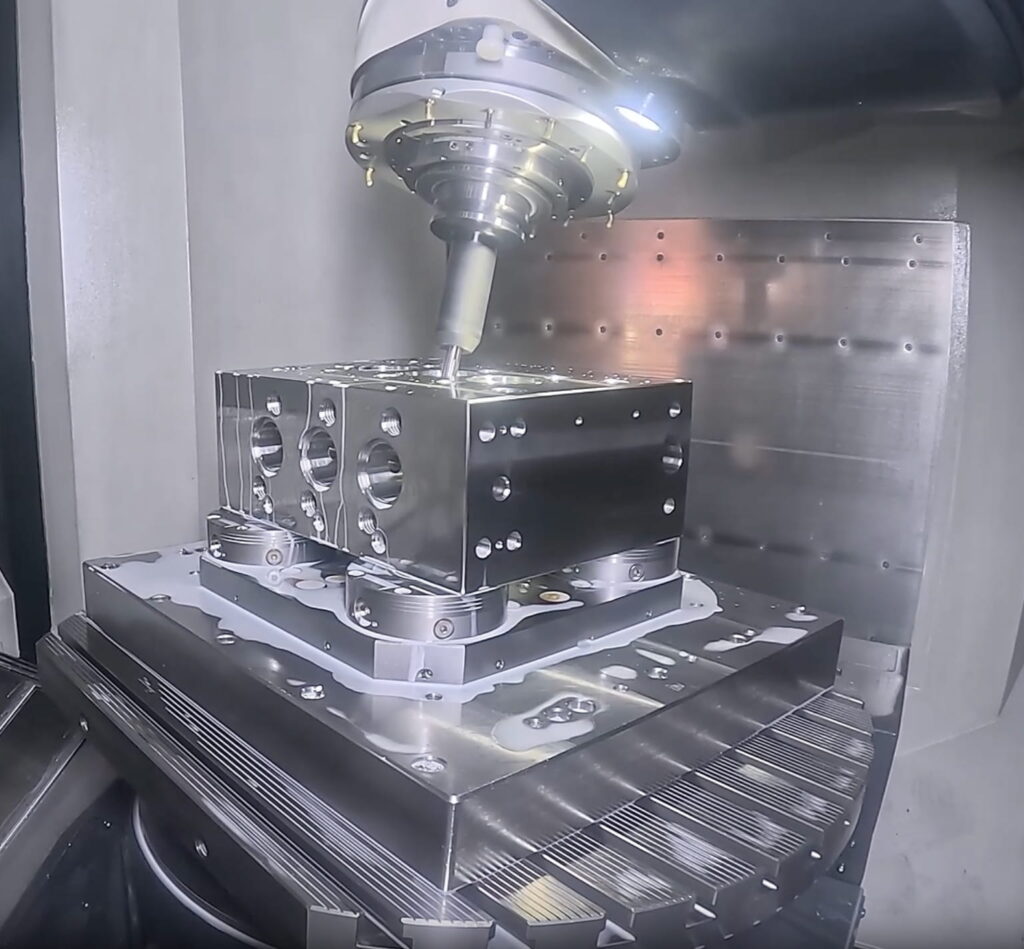
Valve Design: The geometry and material hardness of the homogenization valve directly affect process efficiency. Stellite and tungsten carbide valves operate much longer than stainless steel valves.
Frequently Asked Questions
What is homogenized milk?
Homogenized milk is milk in which the fat globules are reduced to under 1 micron under high pressure and distributed evenly within the liquid. Thanks to this process, there is no cream separation on the surface, and the product remains stable and homogeneous for a longer period.
Why is homogenization necessary in dairy products?
Homogenization prevents cream separation, extends shelf life, improves product color and texture, increases digestibility, and ensures the desired consistency is achieved, especially in products like yogurt and ice cream.
At what pressure should homogenization be performed?
Pressure varies by product type. Pressure values between 100-200 bar for drinking milk, 150-250 bar for UHT milk, 150-200 bar for ice cream, and 200-300 bar for baby food are recommended.
What is the difference between single-stage and two-stage homogenization?
A single-stage system is sufficient for low-fat or low-viscosity products like standard pasteurized milk and yogurt. A two-stage system provides better stability and shelf life for high-fat or high-viscosity products like cream, ice cream, UHT milk, and baby food.
Does homogenization change the milk fat ratio?
No. Homogenization only reduces the physical size of the fat globules and homogenizes their distribution; the total fat ratio of the milk does not change.
What is the difference between homogenized and non-homogenized milk?
In non-homogenized milk, the fat globules are large, so they rise to the surface over time and form a cream layer. In homogenized milk, the globules are at the micron level, so the product remains homogeneous for a long time, and no separation is observed on the surface.
Hommak Dairy Industry Solutions
HOMMAK, as Turkey’s first domestic manufacturer of high-pressure homogenizers, offers specialized engineering solutions for the dairy and dairy products sector. Our laboratory, pilot plant, and industrial-scale product range provides solutions suitable for every scale, from boutique producers to large dairy factories.







Contact Us Now
Contact our expert team today for tailored solutions for your projects.