Pharmaceutical and Pharmacy Homogenization Applications
In pharmaceutical and pharmacy manufacturing, the effectiveness of an active ingredient depends heavily on how small and homogeneously distributed the particles are. Pharmaceutical homogenizers, operating at pressures up to 2100 bar, reduce solutions, suspensions, and emulsions to sub-micron levels, yielding more stable products with higher bioavailability. Hommak offers validation-friendly, GMP-compliant solutions in vaccine, emulsion, liposome, and monoclonal antibody (mAb) production lines with its high-pressure homogenizers specially designed for the pharmaceutical industry.

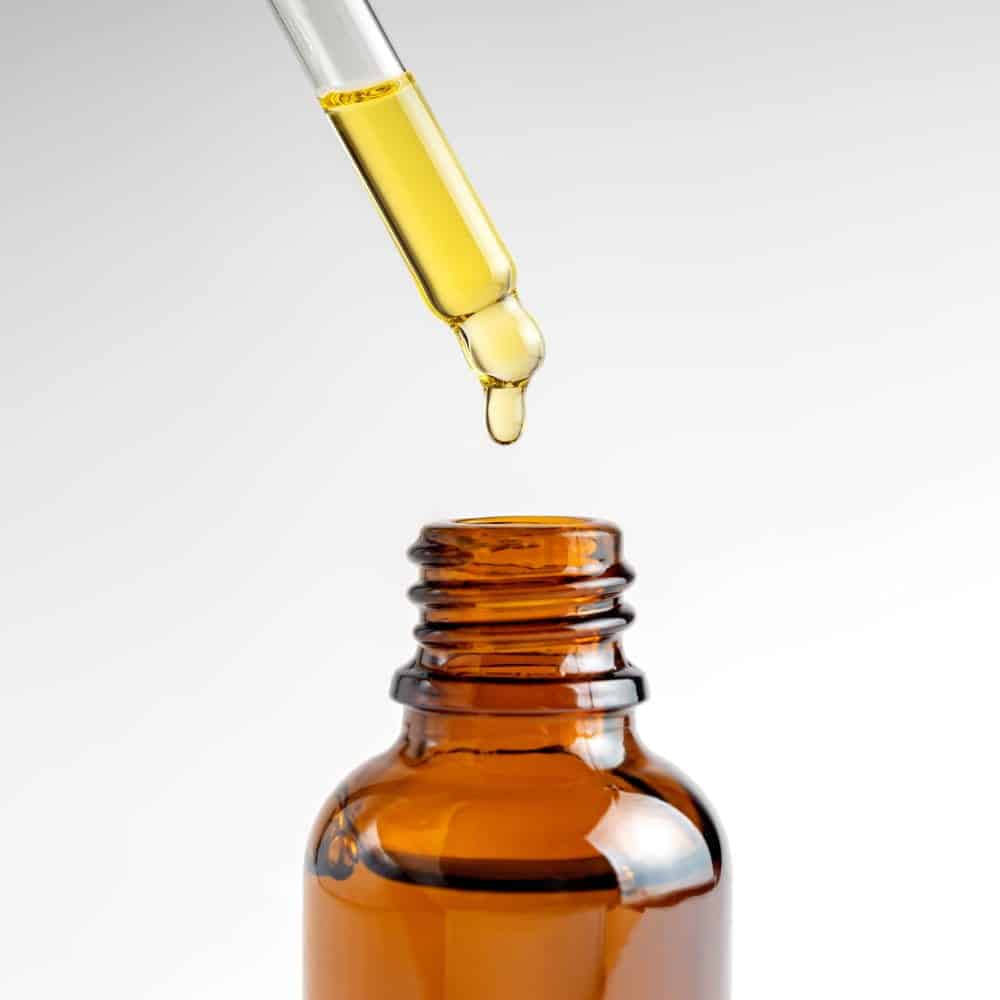
Micronization: The Invisible Quality Threshold of Pharmaceutical Production
In the pharmaceutical industry, the term “homogenization” has largely been replaced by the concept of micronization. This is because the primary goal in pharmaceutical production is not merely mixing, but reducing the particle size to sub-micron levels to measurably increase the absorption rate and stability of the active substance in the body. In Hommak high-pressure homogenizers, the trio of turbulence, cavitation, and shear force generated as the product passes through the specially designed homogenization valve reduces particles up to 500 microns in size down to the 0.4 – 1 micron range.
This process creates a dispersion quality that conventional mixers, colloid mills, or rotor-stator systems cannot achieve. The homogeneous distribution of the active ingredient increases dosage consistency, extends shelf life, and minimizes batch-to-batch variation in production—meaning a highly testable, easily validated, and auditable production line in the eyes of regulators.
Critical Applications of High-Pressure Homogenization in the Pharmaceutical Industry
The role of high-pressure homogenizers in modern pharmaceutical manufacturing extends far beyond simple emulsion preparation. Liposome and nanoemulsion production, processing of vaccine adjuvant emulsions, monoclonal antibody (mAb) processing, insulin crystal production, and intravenous emulsions are now applications that cannot achieve the desired clinical efficacy without high-pressure homogenization.
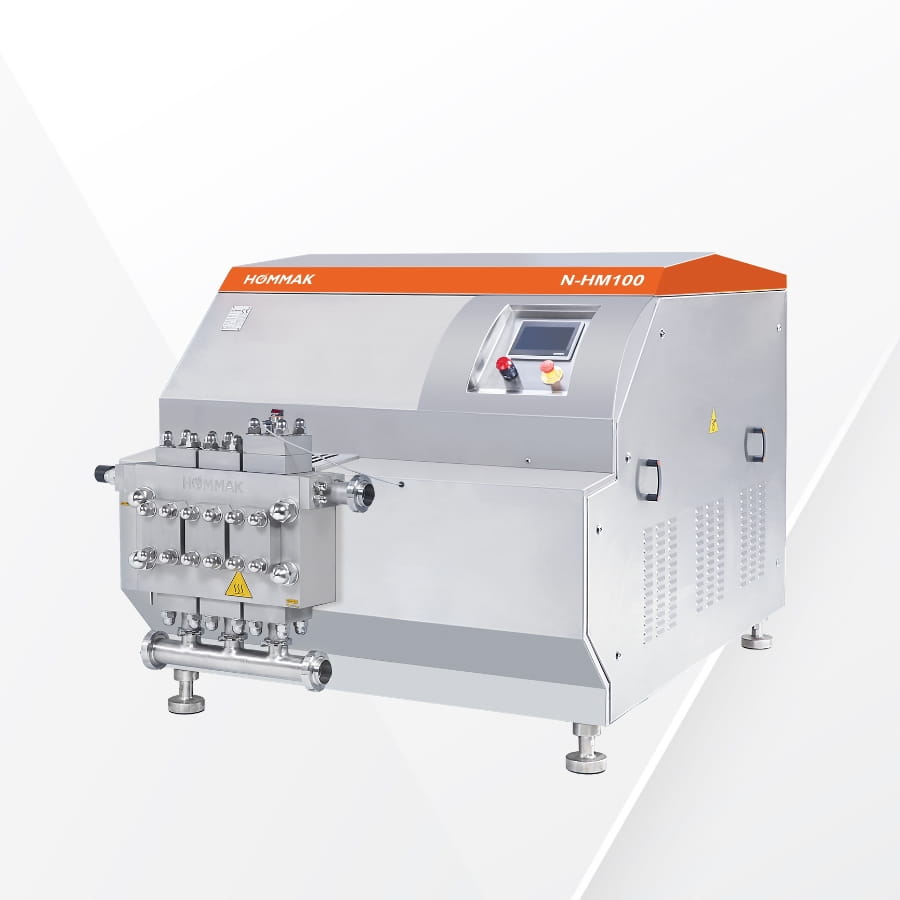
The common requirement for these applications is clear: repeatable particle distribution, controlled temperature management that preserves biological activity, and a cleanable design in compliance with GMP conditions. Hommak homogenizers deliver the same consistency in results across R&D laboratories, pilot plants, and industrial-scale production through their CIP/SIP-compliant stainless steel flow paths, aseptic gasket options, and precise pressure-flow control.
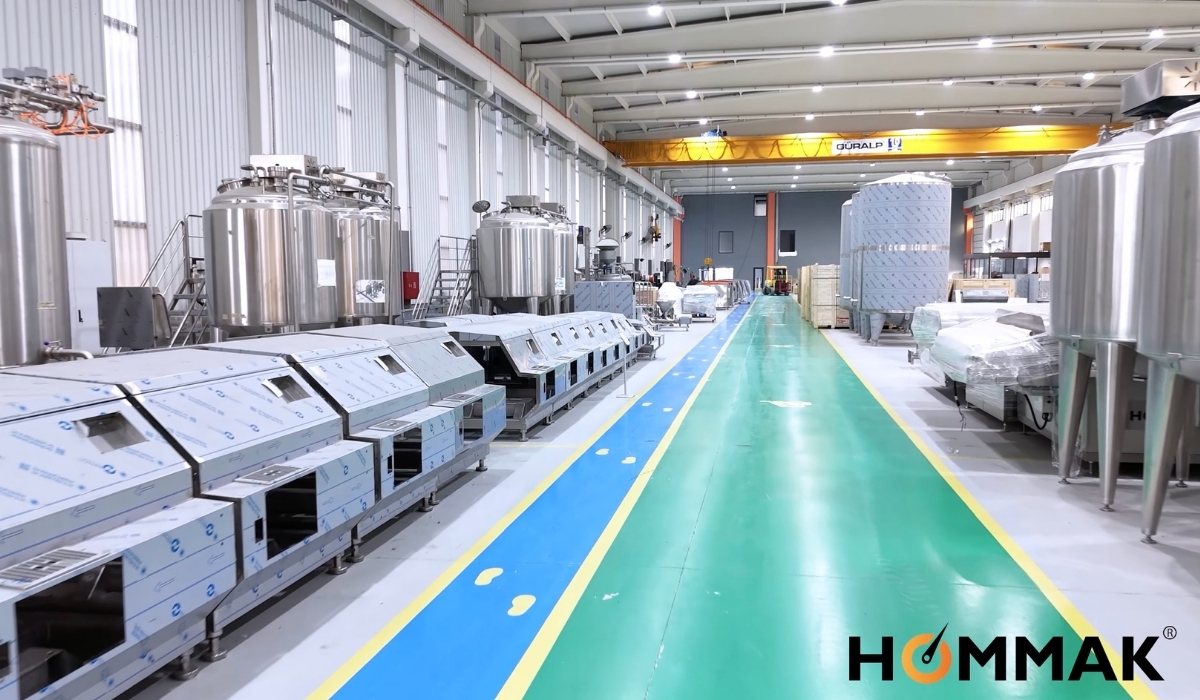
Why Choose Hommak for Your Pharmaceutical Production Line?
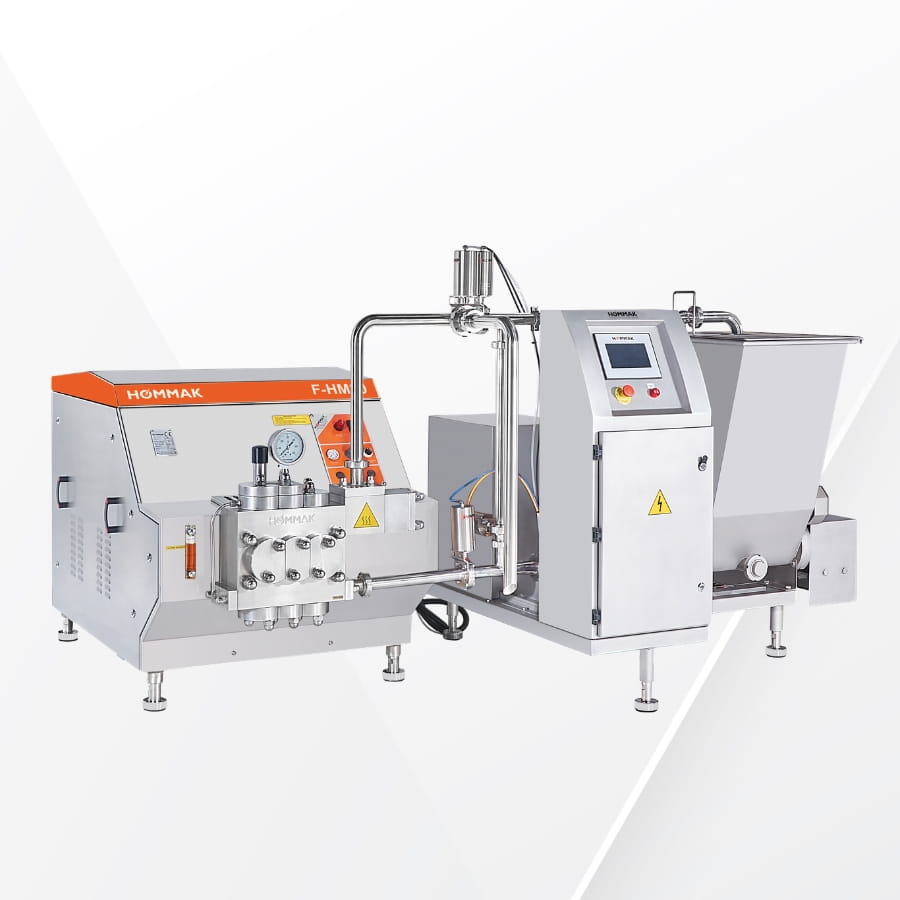
As Turkey’s first domestic high-pressure homogenizer manufacturer, Hommak offers the pharmaceutical sector a scale-independent product range (laboratory / pilot / industrial) delivered with complete validation documents and site-specific engineering support. Because the exact same homogenization valve geometry is preserved from the laboratory to the industrial machine, there is no need to re-develop the formulation during the scale-up process—a critical advantage that saves pharmaceutical companies weeks of time.
Our manufacturing processes are conducted within the framework of ISO standards, hygienic design principles, and GMP-compliant material certification (FDA-approved elastomers, EHEDG-compliant surface roughness).
Contact Form
What is Pharmaceutical Homogenization and Why is 2100 Bar Important?
Pharmaceutical homogenization—frequently referred to as micronization in the industry—aims to achieve a near-molecular homogeneous distribution of the active ingredient, carrier, and auxiliary components of a pharmaceutical formulation. The physical principle of the process is built upon three main effects:
- High pressure energy: The product is pressurized between 1500–2100 bar by the piston pump. This energy is utilized to break down particles.
- Cavitation: The sudden drop in pressure within the homogenization valve leads to the formation and collapse of micro-bubbles in the liquid. This energy ruptures particles within microseconds.
- Shear force and turbulence: The geometry of the valve rapidly narrows the flow, causing particles to collide with one another and undergo size reduction.
The simultaneous application of these three mechanisms creates a dispersion quality unattainable by conventional mechanical mixers. Why 2100 bar? Because pressures below 1000 bar are insufficient to drop down to the <200 nm target particle size level required for liposomes, nanoemulsions, and protein-based drugs. Hommak machines deliver this peak pressure level continuously, controllably, and repeatably.
Superiority of High-Pressure Homogenizers Over Conventional Methods
For many years, rotor-stator mixers, colloid mills, and classic mixers, which were considered standards in pharmaceutical formulation laboratories, have fallen short of providing the particle distribution quality required by modern pharmaceuticals. The comparison table below highlights the distinct advantages of high-pressure homogenizers:
| Criterion | Conventional Mixer / Rotor-Stator | Colloid Mill | High-Pressure Homogenizer |
| Typical particle size | 5-50 µm | 2-10 µm | 0.1-1 µm |
| Particle distribution consistency | Low | Medium | Very High |
| Active ingredient stability | Low (heat + aeration) | Medium | High (controlled heat) |
| Repeatability | Operator-dependent | Partially | Full (via pressure parameters) |
| Ease of scale-up | Low | Medium | High |
| GMP / validation compliance | Limited | Limited | Fully compliant |
Conclusion: For any pharmaceutical formulation requiring precise dispersion, a high-pressure homogenizer is no longer an option, but a necessity.
Typical Application Areas of Hommak Homogenizers in the Pharmaceutical Sector
The primary products and formulations processed with Hommak high-pressure homogenizers in the pharmaceutical and pharmacy sectors include:
Emulsions and Suspensions
- Aloe vera, calamine lotion
- Mineral oil emulsions
- Cod liver oil emulsions
- Intravenous emulsions
- Zinc oxide and Veegum dispersions
- Milk of magnesia
Biopharmaceuticals
- Processing of vaccine emulsions (including adjuvant emulsions)
- mAb (Monoclonal Antibody) production processes
- Insulin crystal production processes
- Liposomes and nanoemulsions
- Artificial blood products
- Processing of pharmaceutical and organic proteins
Topical and Oral Products
- Medical and analgesic creams
- Skin care, body care, and hair care products
- Antacid laxative formulations
- Effervescent tablet suspensions
- Medical soaps
- Vitamin emulsions
- Penicillin and benzoyl peroxide dispersions
The common requirement across all these applications is repeatable quality. Hommak homogenizers bring this traceability to your production line by logging pressure, flow, and temperature parameters via a PLC-based control panel.
GMP Compliance, Validation, and Sterile Design
- Hygienic design: All parts along the flow path are manufactured from AISI 316L stainless steel; surface roughness is guaranteed at Ra ≤ 0.8 µm.
- CIP/SIP compliant: Double O-ring sealing system compatible with Clean-In-Place (CIP) and Steam-In-Place (SIP) procedures.
- FDA approved elastomers: All gaskets (EPDM, FKM, Silicone) comply with FDA 21 CFR 177.2600.
- Dead volume minimization: Cross-contamination risks are significantly reduced through flow-path optimization calculations.
- Validation documentation: IQ (Installation Qualification), OQ (Operational Qualification), and PQ (Performance Qualification) protocols are delivered alongside the machine.
Seamless Scale-Up from Laboratory to Industrial Production
One of the most frequent challenges in the pharmaceutical sector is that formulations developed at the laboratory scale fail to retain the same particle distribution when transitioning to industrial machinery. Hommak’s solution lies in having the exact same design principles for the homogenization valve geometry across all scales.
| Scale | Typical Flow Rate | Intended Use |
| Laboratory Type Homogenizer | 5-50 L/hour | Formulation development, R&D |
| Pilot Plant Homogenizer | 100-500 L/hour | Clinical trials, small batch production |
| Industrial Homogenizer | 1000-25000 L/hour | Commercial production |
Thanks to the identical valve principle, optimum pressure and number of passes obtained in the lab can be directly transferred to pilot and industrial scales. This is a critical engineering advantage that shortens the Time-to-Market by an average of 30%.
Frequently Asked Questions
Q: Is high-pressure homogenization the same as micronization?
A: Yes, in the pharmaceutical industry, the high-pressure homogenization process is often referred to as ‘micronization.’ The process reduces the particle size to sub-micron levels, increasing the bioavailability of the active ingredient and formulation stability.
Q: What pressure range do Hommak homogenizers operate in?
A: Hommak high-pressure homogenizers are custom-configured for specific applications to operate between 100 bar and 2100 bar. For applications requiring particles below 200 nm, such as liposome and nanoemulsion production, the 1500-2100 bar range is highly recommended.
Q: Which homogenizer type should I select for pharmaceutical production?
A: We offer three options based on your production volume: Laboratory type (5-50 L/h for formulation development), pilot plant (100-500 L/h for clinical trials), and industrial (1000+ L/h for commercial production). Due to the identical valve principle, formulations can be transferred seamlessly between scales.
Q: Are Hommak homogenizers GMP compliant?
A: Yes. The entire flow path is made of AISI 316L stainless steel, and a surface roughness of Ra ≤ 0.8 µm is guaranteed. They are CIP/SIP compliant, use FDA-approved gaskets, and are delivered with full IQ/OQ/PQ validation documentation.Q: Is a custom design required for mAb (Monoclonal Antibody) and vaccine production?
A: Yes. For products sensitive to biological activity, Hommak offers customization options such as controlled temperature management (limiting product outlet temperature), aseptic design, double mechanical seals, and low shear force modes. Product bioactivity is fully preserved via project-based engineering support.
Contact Us Now
Contact our expert team today for tailored solutions for your projects.