How to Prevent Phase Separation
What Is Phase Separation?
When emulsions and suspensions are left on their own, they separate back into the individual components that make them up. This state of separation is called phase separation (or phase splitting).
In heterogeneous mixtures, two approaches are used to prevent phase separation — or to keep the mixture in a homogeneous form for as long as possible: a chemical method and a physical method. In the chemical method, substances called emulsifiers are added to stop separation and maintain a continuous phase. In the physical method, the particle size of the droplets is reduced so that phase separation is prevented or delayed.
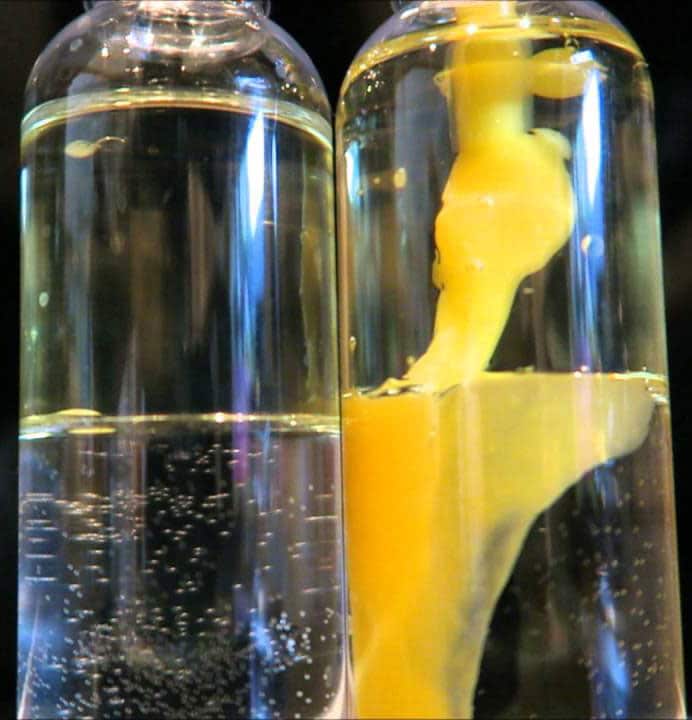
What Is an Emulsifier?
An emulsifier is an added substance used to create a homogeneous mixture of food ingredients with different densities, such as oil and water. In short, emulsifiers are molecules that are attracted to both oil and water. An emulsifier chemically stabilizes an emulsion and is typically a surfactant — a substance that reduces interfacial (surface) tension.
Emulsifiers are also referred to as emulsifying agents or emulgents.
Where Are Emulsifiers Used?
Substances such as beeswax, fatty acids, lecithin, and egg yolk have been used as emulsifiers for many years. Emulsifiers are widely used to prevent phase separation in products such as mayonnaise, margarine, cream-based sauces, packaged foods, and in the pharmaceutical and paint industries., ilaç ve boya sanayisinde faz ayrışmasını engellemek için yaygın olarak kullanılmaktadır.
Disadvantages and Drawbacks of Using Emulsifiers
- They increase production costs.
- They can compromise the natural structure of the product.
- They may trigger allergic reactions in the human body.
- They may contribute to neurological disorders.
- In people who consume large amounts of processed food, they may contribute to obesity and other health problems.
- They may contribute to respiratory issues such as shortness of breath.
- They may lead to skin problems and dermatological conditions.
- Linked to digestive disorders, this type of additive may increase the risk of serious conditions such as bowel cancer.
Preventing Phase Separation by Physical Methods
To prevent phase separation physically, the particle size of the product must be reduced. As particle size decreases, surface tension is reduced and phase separation is minimized.
According to Stokes’ Law, the rate of phase separation is proportional to the square of the particle diameter. In other words, if it takes time T for an oil globule with a particle diameter of 2R to separate, then an oil globule with a particle radius of R will take 4T to separate.As a result, if you want to prevent phase separation by physical means, the particle size must be reduced. The most effective way to reduce particle size — and therefore to prevent phase separation — is the high-pressure homogenizer.
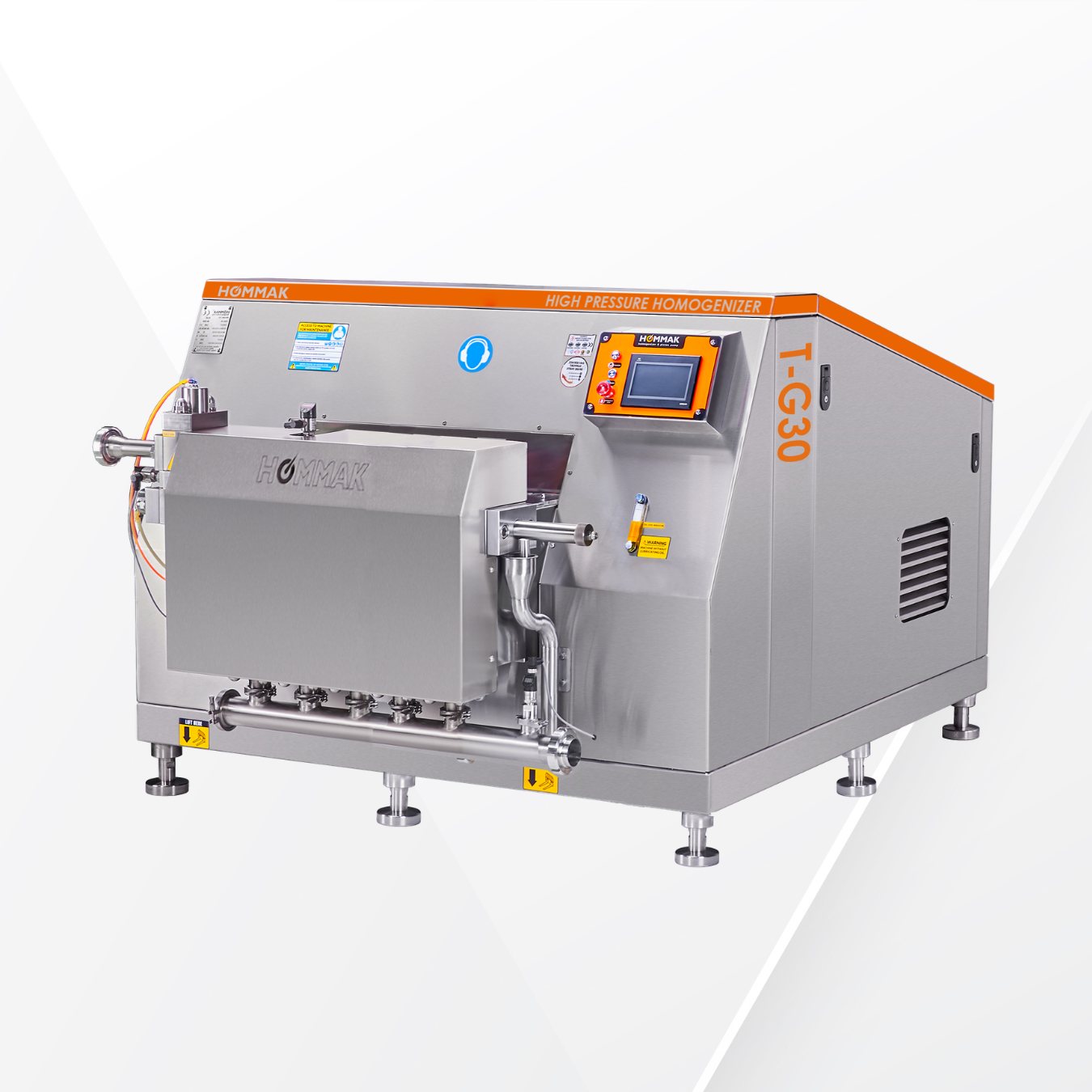
What Is a High-Pressure Homogenizer?
A fluid product with a heterogeneous structure is forced through a narrow gap under high pressure. As the particles pass through this gap at high speed, they are micronized; their surface area increases and they are converted into a permanently homogeneous structure. This process is called homogenization. The machine that carries out the homogenization process is called a high-pressure homogenizer.
“Depending on the pressure you apply in the homogenizer and on the product, you can reduce particle sizes by a factor of 2 to 20. This translates into 4 to 400 times slower phase separation. As a result, the production process becomes easier and the shelf life of the product is extended.”
The process that takes place inside the homogenizer is entirely physical and requires no additives, so the natural structure of the product is preserved and healthier products can be obtained. In addition, reducing the use of additives lowers production costs. For these reasons, high-pressure homogenizers are widely used to prevent phase separation.
How Much Does a High-Pressure Homogenizer Cost?
To find the answer to this question, you first need to answer the following:
To get detailed information about high-pressure homogenizer prices, please get in touch with us.